Most Mill Valley sellers walk into their listing appointment thinking about staging, comps, and photography. The two documents that actually determine how the last three weeks of escrow go are the ones almost no one talks about until day 20: the City's Residential Building Report and the AB-38 defensible space inspection.
Neither one has the power to stop your sale. That is precisely why they cause problems. Unresolved items on either report do not block a close. They attach to the parcel, transfer to the new owner, and in the meantime hand your buyer a clean, documented reason to renegotiate price with a week left on the clock.
The friction most sellers meet at day 20
Mill Valley has required a Residential Building Report at every change of ownership since 1973, under an ordinance that treats sale of a residential building without a delivered RBR as unlawful. Municipal Code §20.70.070 makes it unlawful to sell or exchange a residential building in the City of Mill Valley without first having obtained and delivered a report of residential building record, and the report costs $389 per single-family home and $89 per additional unit.
The report itself is a records check plus a physical inspection. It is not a home inspection in the buyer-side sense. It is the City comparing what is standing on the parcel to what has been permitted, and flagging the delta.
Here is the part sellers miss. The City does not have the authority to hold up the sale of a property, but if the property is sold, any required outstanding permits will be the legal responsibility of the new owner. A buyer who reads the RBR carefully understands they are inheriting whatever the inspector flagged. Every reasonable buyer, and every buyer's agent worth hiring, uses that as leverage.
What the RBR actually checks
The primary purpose of the inspection is a cursory review of the property to identify any life safety or sanitation issues with potential to cause injury, and the inspector also looks to identify any illegal construction and unpermitted second units.
The records piece runs against Mill Valley's online permit history, which is thinner than most owners assume. The eTRAKiT database contains records dating from approximately November 2012 to the present, and for a complete history of building permits for a parcel, the Planning & Building Department must be contacted directly. For a home that has been standing since the 1920s or 1950s, that means the digital record covers roughly the last decade. Anything before that lives in a paper file the Building Department has to pull.
Common flags on an RBR:
- Decks and railings added without a permit, or with a permit that was pulled but never finaled
- Converted garages, basements, or attics operating as bedrooms or ADUs
- Skylights, sliders, and window enlargements done during a kitchen or bath remodel
- Water heater and electrical panel swaps missing a plumbing or electrical permit
- Fireplaces converted from wood-burning without documentation
The owner or their authorized representative must legalize any violation the inspector identifies as mandatory in the report, a building permit must be obtained to address the unpermitted work, and depending on the extent, the process may involve other departments as needed. Mandatory legalization on an unpermitted second unit, when discovered during the RBR window, is not a two-week problem.
The AB-38 layer on top
If your Mill Valley parcel sits in a High or Very High Fire Hazard Severity Zone, and a large share of the city's hillside stock does, you have a second, parallel inspection.
The purpose of an AB-38 inspection is to make sure properties in high risk fire zones are being safely maintained and complying with all defensible space laws before they are sold, and it is state law that anyone selling a property located in a High or Very High Fire Hazard Severity Zone has to have an AB-38 inspection.
For most of Mill Valley proper, plus Sausalito, Tam Valley, Homestead Valley, Mill Valley, Strawberry, and Alto, the inspection is coordinated through Southern Marin Fire District and the Marin Wildfire Prevention Authority. What the inspector is looking at goes beyond weed abatement. Inspections focus on all zones of defensible space including Zone 0, the 0 to 5 feet from structures where ignition risk is highest, and also assess home hardening features like vents, roofing, decks, and fencing.
That Zone 0 focus matters. It is the reason the wood mulch bed against your foundation, the juniper hedge under the eave, and the redwood deck skirting will show up on the report even when the rest of the yard is immaculate.
The escape valve in AB-38 is more forgiving than the RBR's. If the property will not meet compliance with vegetation management laws, codes and ordinances, the seller and the buyer shall enter into a written agreement pursuant to which the buyer agrees to obtain documentation of compliance within one year after closing escrow. This is a negotiated document, and its existence is exactly why a buyer's agent may push for a credit at close rather than accept the deferred obligation on their client.
RBR and AB-38, side by side
| Residential Building Report | AB-38 Defensible Space | |
|---|---|---|
| Trigger | Every residential sale in Mill Valley city limits | Sales in a High or Very High Fire Hazard Severity Zone |
| Governing authority | City of Mill Valley Building Dept, MMC §20.70.020 | State law, administered locally by Southern Marin Fire and MWPA |
| Physical inspection | Yes, cursory life safety and code review | Yes, Zone 0/1/2 vegetation and home hardening |
| Cost to seller | $389 single-family | Free evaluation through MWPA |
| Records check | Permit history via eTRAKiT plus pre-2012 paper files | Prior Wildfire Risk Report if available at marinwildfire.org/dspace |
| If items are unresolved at close | Transfer to buyer as legal responsibility | Written seller-buyer agreement, buyer complies within one year |
| Realistic timeline | Several weeks, longer if legalizing unpermitted work | Days to schedule, longer if remediation required |
Sequencing, and why most sellers get it wrong
The default sequence goes something like this: list the home, accept an offer, the escrow officer or the buyer's agent asks for the RBR, the seller applies, the inspector comes out, the report lands eight days before close, and the negotiation restarts.
A better sequence looks like this:
- Six to eight weeks before listing, pull the parcel's own permit history through Mill Valley eTRAKiT and cross-reference it against what is actually on the property. Note every deck, addition, converted space, and mechanical upgrade.
- If the home predates 2012, email the Building Department at [email protected] to request the paper file. Assume this takes two to three weeks.
- Check AB-38 status through the Marin County lookup and, if the parcel is in scope, request the Wildfire Risk Report at marinwildfire.org/dspace or through Southern Marin Fire. If the report is more than a year old, request a fresh inspection.
- Apply for the RBR itself once the listing is imminent, not once the offer is accepted. This shifts the report into the disclosure packet buyers see up front, which changes the negotiation from a defensive one to a priced-in one.
- Address anything mandatory before offers land. Anything you cannot resolve, disclose openly with a written scope and a contractor estimate attached.
The sequence works because it moves the RBR and AB-38 from a late-escrow discovery into a documented, priced starting point. Buyers still ask for concessions. They have less runway to build a story around them.
The unpermitted deck problem
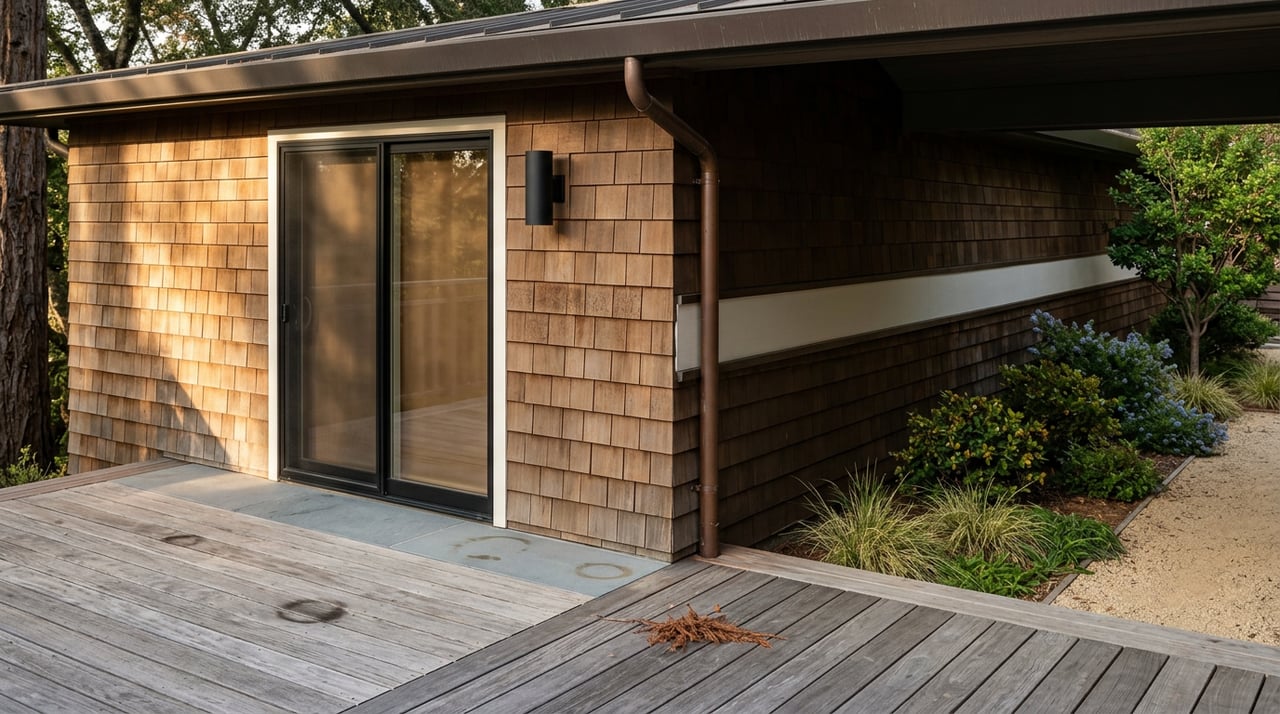
Mill Valley's hillside inventory is heavy with decks. Many of them were added, extended, or rebuilt during periods when the ownership changed hands, permits lapsed, or contractors worked without pulling one at all. The deck sitting off your primary bedroom may not have a matching record in eTRAKiT and may not have one in the paper file either.
Unpermitted work must be disclosed, and some buyers or lenders may require resolution before closing. That last clause is the one that quietly kills deals. A conventional lender doing a full appraisal will sometimes require permitted status on habitable additions before funding. If your buyer is financing and the appraiser calls out an unpermitted bedroom, resolution stops being negotiable.
Legalization of an existing deck typically requires stamped plans, a structural review, and inspection. On a hillside lot with a steep grade, the review may loop in geotechnical requirements. Budget months, not weeks, and price the work into your list price rather than absorb it during escrow.
The Zone 0 conversation
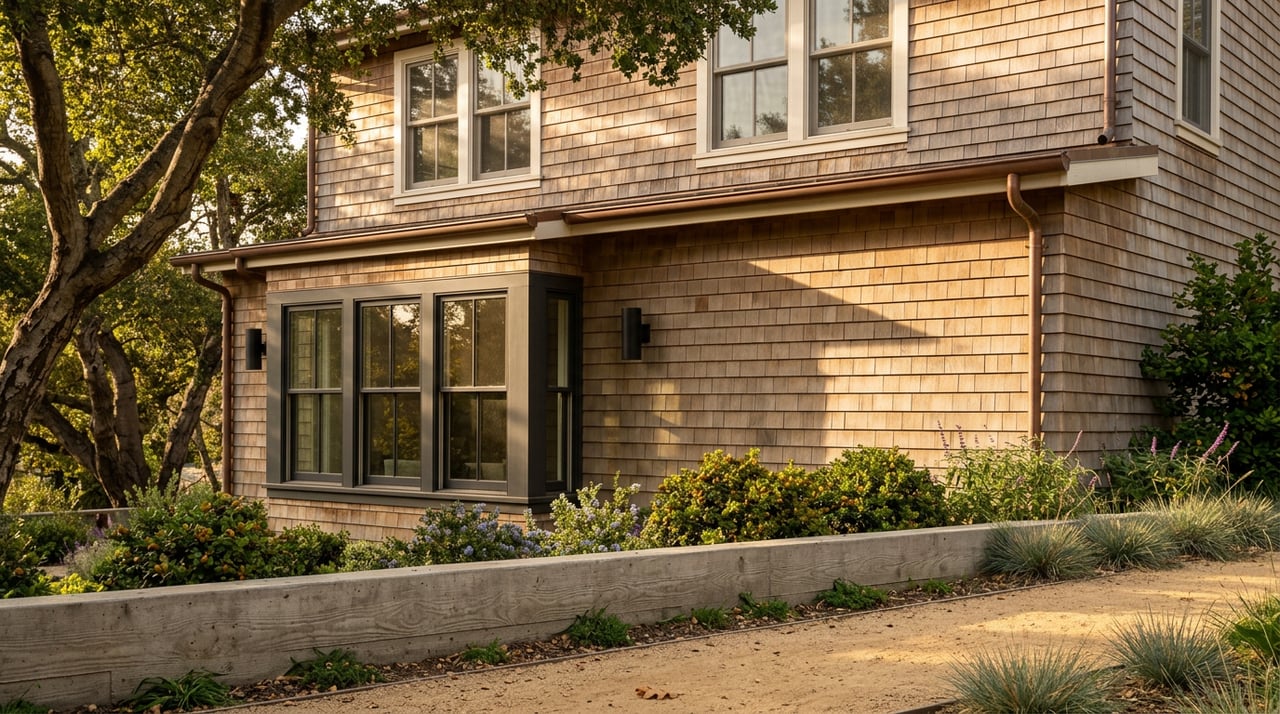
For AB-38 purposes, the five feet closest to your house is now the most scrutinized part of the property. Cedar shingle siding meeting a lavender bed with dry stems, a wood gate hinged to the house, a stack of firewood on the deck: all of these are Zone 0 items.
A wildfire risk report may include items related to defensible space, vegetation, access, vents, gutters, fencing, decks, siding, or combustible materials close to the home. A seller who reads the report before listing has time to swap the mulch, prune the ornamental, and install ember-resistant vent screens. A seller who reads it after the buyer's inspection has time to write a credit.
What this actually means for your list price
The thesis is short. In Mill Valley, the RBR and AB-38 do not decide whether your home sells. They decide how much of the sale price you keep.
Every unresolved item on either report is a lever a competent buyer's agent will pull. Pulled early, in your disclosure packet, that lever is priced into the offer. Pulled late, in the last week of escrow, it comes off the top of the sale price in the form of a credit, a repair, or a re-negotiated price. The dollar delta between those two outcomes is often larger than the cost of doing the work up front.
Sellers who front-run both reports enter escrow with fewer unknowns, cleaner disclosures, and the credibility that comes from having handled the paperwork before it was asked for. That credibility is worth something in a market where buyers are increasingly cautious about anything that looks deferred.
FAQ
Does the City of Mill Valley re-inspect after I fix flagged items? Generally, completed reports are not revised, and re-inspections are not required, the information contained in the report is used as a disclosure, and if a life safety issue is discovered or a mandatory correction is required, a permit or re-inspection may be required.
My property is in unincorporated Mill Valley. Do these rules apply? The Mill Valley RBR is a City ordinance and applies only within city limits. Confirm the address by searching on Marin Map, and if the jurisdiction states Mill Valley it is within city limits, while Unincorporated means the property is within Unincorporated Mill Valley and County of Marin should be contacted for information. AB-38 applies regardless of incorporation, based on the state fire hazard zone.
Can I use a recent defensible space inspection to satisfy AB-38 at sale? In many California jurisdictions, a compliant inspection completed within six months of listing satisfies the requirement. Confirm the current window with Southern Marin Fire or the Marin County Fire Prevention office before relying on an older report.
Selling a Mill Valley home well is a project, not a listing. If you are thinking about a sale in the next six to twelve months and want a candid read on what your RBR and AB-38 exposure looks like before you commit to a timeline, AnneLise Staal is available to walk the property and map the work. Schedule a consultation.