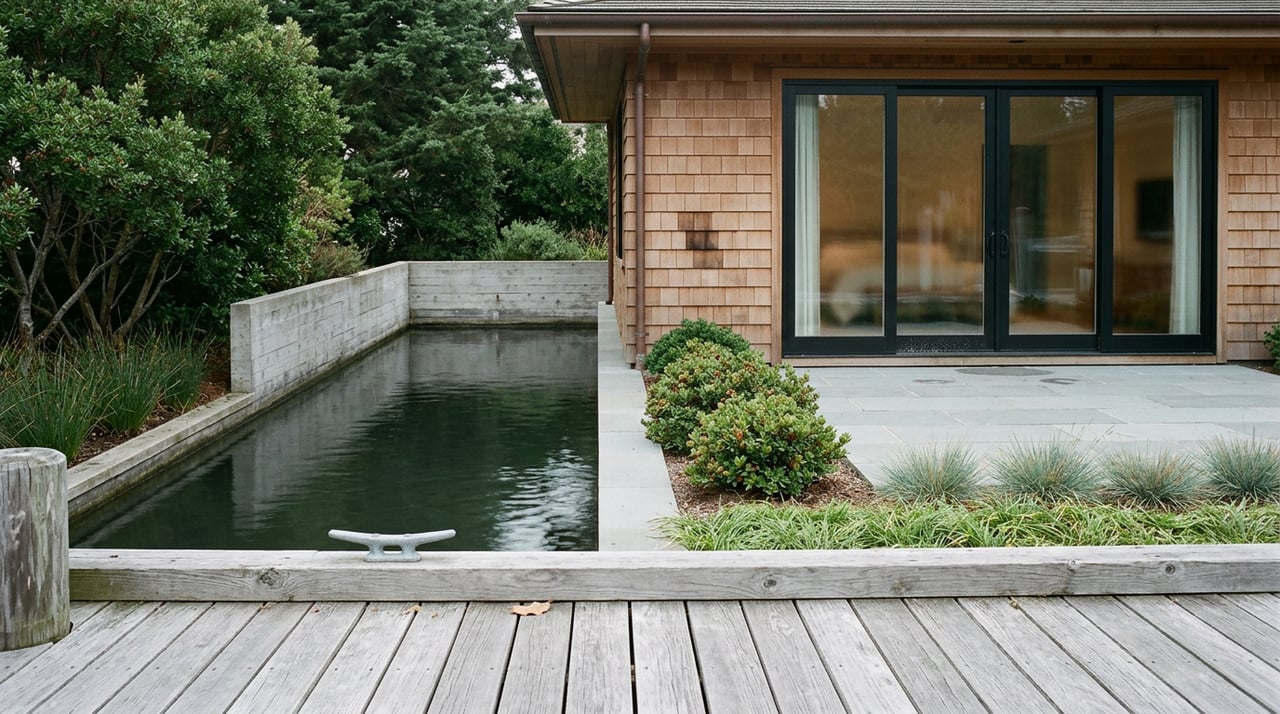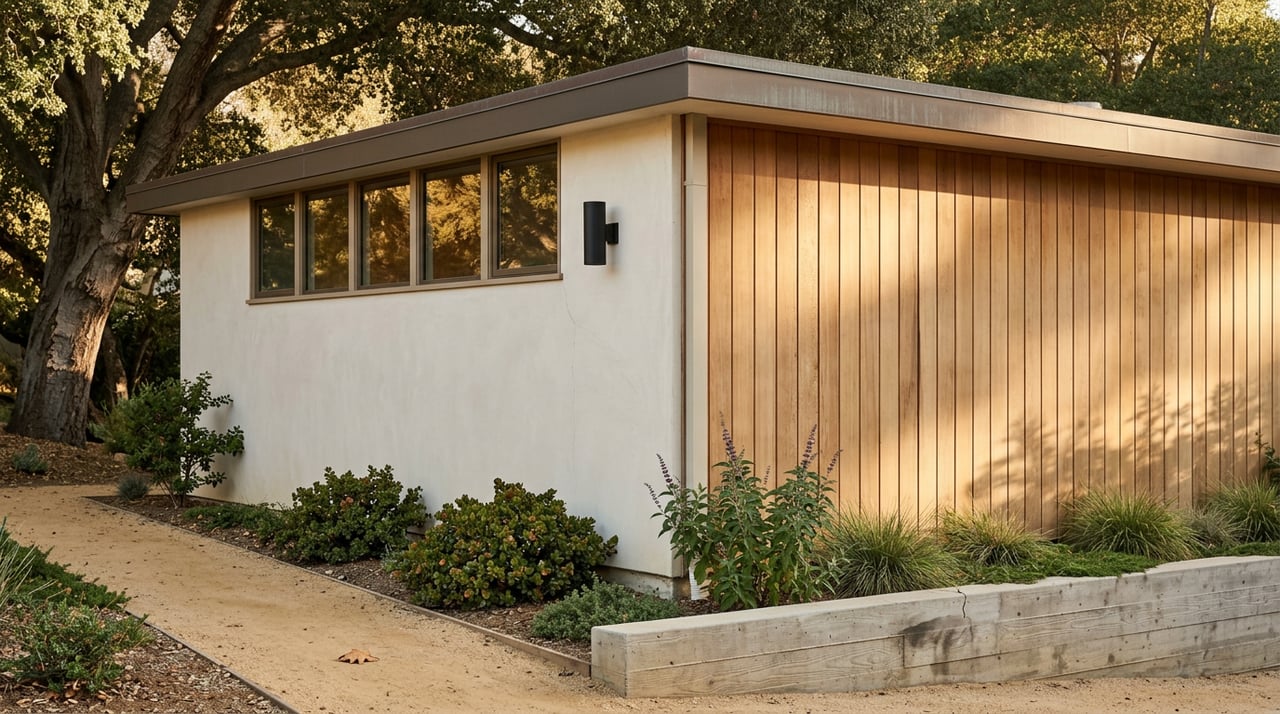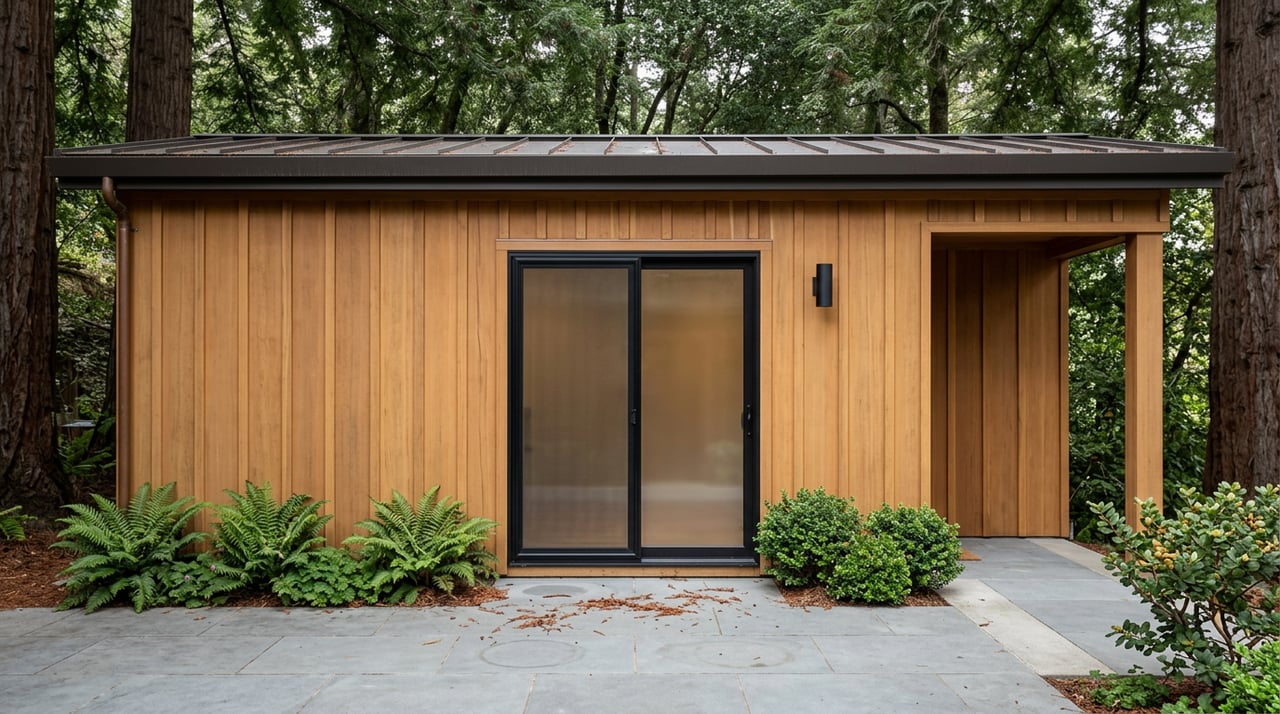
Somewhere in Mill Valley right now, there is a studio over a garage with good light and nobody living in it. Maybe it was a home office that stopped getting used once the kids came home from college. Maybe it is a legal accessory unit that got permitted, painted, and then quietly forgotten. The owner isn't running an Airbnb out of it and isn't renting it long term either. It just sits there, appreciating in theory and earning nothing in practice.
The City of Mill Valley is betting there are somewhere between 1,000 and 1,200 properties like that in town right now. That estimate comes from Placemate Inc., the company the city hired to run its new Lease to Locals pilot, and it is the number that explains everything else about how the program is built. This is not a program designed to compete with a good Airbnb listing. Run the numbers side by side and it becomes obvious the incentive only makes financial sense for space that is currently earning nothing at all.
Two programs, one empty room
Mill Valley property owners sitting on unused space now have two formal paths available to them, and for the first time both come with real dollar figures attached.
The first is short-term rental, which the city has allowed in every residential unit except deed-restricted accessory dwelling units and junior accessory dwelling units, since well before this year. Hosts register annually with the Planning Department, currently for a $181 initial fee or $90 to renew, carry a residential business license running $15 per unit plus a $4 processing fee, and remit a 10 percent transient occupancy tax to the city every month. One rule catches people off guard: if your lot has a JADU, you cannot short-term rent the primary residence at the same time. The two units cannot both generate nightly income under current city code.
The second path launched in November 2025. Lease to Locals pays property owners a one-time cash grant, ranging from $3,500 for a single room in a shared home up to $14,000 for a full private home with multiple qualifying tenants, in exchange for signing a 12-month lease with a local worker. Tenants have to earn no more than 120 percent of area median income, currently $156,000 for a household, and rent is capped at $1,500 a month for a room or $4,500 a month for a full unit. The money arrives in two installments, half at lease signing and half after the tenant completes the term. Mayor Stephen Burke framed the goal plainly when the program launched, saying the city is committed to affirmatively furthering fair housing and giving its workforce the chance to live there, alongside other efforts like the Front Porch Home Match program and the 45-unit Bayview Terrace affordable project.
What started as a six-month test got a longer runway fast. By the time the city updated its formal program guidelines on February 27, 2026, Lease to Locals was already set to run through 2027. Earlier reporting had new qualifying leases needing to start by May 2026, so anyone reading this now should confirm the current application window directly with the city before assuming that date still holds.
What the math actually says
Here is where the two paths stop looking like reasonable alternatives to each other.
Rabbu's Mill Valley short-term rental data, current as of April 2026, shows an average nightly rate of $432 across 171 active listings, with occupancy running 49 percent, several points above California's 43 percent state average. Nightly rates scale sharply by size, from $203 for a studio up to $1,377 for a five-bedroom home. The average listing pulls $73,111 a year, and a five-bedroom property clears more than $266,000 annually. July is the strongest month at roughly $8,554 in average monthly revenue, with August close behind at $8,507.
Put a small unit through both models and the gap shows up immediately. A studio running at that market average rate and occupancy brings in roughly $36,000 a year in gross short-term rental revenue. Run that same unit through Lease to Locals instead, at the $1,500 monthly rent cap plus a $3,500 incentive, and the owner nets about $21,500 in year one. That is a real difference, over $14,000 in favor of the short-term rental, even before accounting for the fact that most of a short-term rental's guest-facing costs, like the transient occupancy tax, get passed through to the guest rather than absorbed by the host.
| Small unit (studio-scale) | Large home (5BR-scale) | |
|---|---|---|
| Short-term rental, market average | ~$36,000/year | $266,000+/year |
| Lease to Locals total, year one | ~$21,500 | ~$68,000 |
| Gap in favor of STR | ~$14,800 | ~$198,000 |
Scale that comparison up to a five-bedroom home and the gap turns into a chasm. The full-home Lease to Locals track tops out at a $14,000 grant plus $4,500 a month in capped rent, which is $68,000 in year one. A five-bedroom short-term rental earning the market average brings in nearly four times that. No owner with a genuinely marketable large home is choosing the city's cash over that kind of nightly income, and the program was never built to ask them to.
Who this actually rewards
That gap is the whole story. Lease to Locals is not underpriced by accident. The incentive tiers and rent caps only make sense as a tool for activating space that is currently producing nothing, not for pulling owners away from a working short-term rental.
The 49 percent occupancy figure is itself a market average across active, professionally listed properties, many of them the kind that show well in photos and get managed with the attentiveness of a business. An owner with a studio that has never been staged, priced dynamically, or marketed beyond a single platform is unlikely to hit that average, especially outside the June-through-August peak. For that owner, the guaranteed $21,500 from Lease to Locals, arriving without a single guest turnover or dynamic pricing decision, can be the more rational year-one choice, even though it trails the theoretical STR ceiling.
For the roughly 1,000 to 1,200 properties Placemate believes are sitting idle or barely used, the honest comparison isn't $36,000 against $21,500. It's $21,500 against $0. Against that baseline, Lease to Locals is the clear winner, and it always was designed to be.
The owners who should think twice are the ones who have already done the work: renovated the ADU, furnished it well, built a track record of five-star reviews. For that unit, the math in the table above is not theoretical. It is the actual trade an owner would be making, and it does not favor the city's incentive.
FAQ
Can I enroll a property in Lease to Locals if it currently has a short-term rental permit? Program guidelines specify that a property currently operating as a hosted or short-term rental is disqualified from participating. The two paths are mutually exclusive under the current rules.
Does the JADU restriction affect Lease to Locals eligibility? Deed-restricted ADUs and JADUs are excluded from the short-term rental program, but that is a separate rule from Lease to Locals eligibility, which is governed by vacancy status and tenant income, not unit type. Anyone weighing both programs for an ADU should confirm current terms with the city directly, since ADU and JADU rules intersect with both programs differently.
What happens to the incentive if my tenant leaves before the lease ends? Program guidelines note that incentive payments are tied to lease compliance checks partway through and at the end of the term. Falling out of compliance during the lease can disqualify a property owner from receiving the remaining payment.
Is Lease to Locals income taxable the same way short-term rental income is? The two income streams are structured differently. Short-term rental income is subject to the city's transient occupancy tax on top of ordinary income tax treatment. Lease to Locals payments function as a program grant tied to a long-term lease, and owners considering either path should talk to a tax professional about how each is treated for their specific situation.
The bigger picture
None of this is a case against Lease to Locals. It is a well-funded, clearly communicated program solving a real problem, and for an owner whose space has been sitting empty out of inertia rather than intention, it is close to free money. The point is that the incentive was never trying to out-earn a good Airbnb listing, and the numbers make that obvious the moment you run them side by side.
If you are trying to figure out which side of that line your property falls on, whether the smarter move is a renovation that positions a space for real nightly-rate income or a straightforward long-term lease backed by the city's incentive, that is exactly the kind of decision worth walking through with someone who has done the math before. Staal Real Estate works with Mill Valley owners on renovation strategy and short-term rental positioning as part of a broader Marin practice, and can help you figure out which path actually pencils out for your specific space. Schedule a consultation to talk through your options.