If you are searching Mill Valley, you are probably not just asking which homes are available. You are really asking what daily life feels like once the moving boxes are gone. In a place shaped by steep hills, walkable pockets, and distinct micro-locations, that question matters a lot. This guide will help you understand how Mill Valley neighborhoods tend to feel day to day so you can narrow your search with more confidence. Let’s dive in.
Why micro-location matters in Mill Valley
Mill Valley is a small city of about 4.8 square miles with roughly 14,000 residents, located about 14 miles north of San Francisco. It sits between Mount Tamalpais and Highway 101, which helps explain why daily life can feel very different from one area to the next.
The city describes itself as a suburban community with distinctive residential neighborhoods shaped by many eras of growth. It is also largely built out, and the natural topography limits where development can happen. In plain terms, that means two homes with the same city name can offer very different routines.
Terrain is a big part of the story. Mill Valley’s landscape is rocky and mountainous, and the city has more than 175 heritage steps, lanes, and paths that historically connected homes to downtown, bus stops, schools, and open space. That network still influences how people move through town today.
Downtown feels most walkable
If you want the easiest access to shops, dining, errands, and public gathering spaces, downtown is usually the most straightforward fit. The area around Throckmorton, Miller, Sunnyside, Corte Madera, and Old Mill tends to offer the most walkable day-to-day experience.
The city has invested in this area through its Downtown Project, with work focused on paving, ADA curb ramps, sewer and storm-drain improvements, and better flow for cars, bikes, and pedestrians. Downtown Plaza also adds practical everyday benefits, including a café, benches, picnic tables, and bathrooms.
For many buyers, this part of Mill Valley feels the most connected and active. You may be able to leave the car parked more often for coffee, a quick errand, or meeting friends nearby. If your priority is convenience and a small-town center you can actually use, this area often rises to the top.
What downtown living often means
Day to day, downtown can feel easier and more social than other parts of Mill Valley. You are closer to the civic core, and the city’s RSVP parking program is designed to make it easier to shop, eat, and visit downtown.
That said, the feel is less tucked away than the hills or canyon areas. If your ideal routine includes being in the middle of activity, that can be a plus. If you want more separation or a more private setting, another micro-location may fit better.
The flats feel practical and commute-friendly
The flatter east-side corridors tend to appeal to buyers who care about smoother daily logistics. Areas around Miller Avenue, East Blithedale, Camino Alto, Sycamore, and the Bayfront and Dog Park area often feel more practical in the context of commuting and getting around.
The city’s roadway network identifies East Blithedale and Miller as the primary arterials into and out of Mill Valley, both with connections to Highway 101. If your workweek includes regular driving or you want easier in-and-out access, this can be a meaningful advantage.
Transit is part of the picture too. Current service includes Golden Gate Transit Route 114 to San Francisco, Route 120 serving Strawberry, Marin City, Sausalito, and San Francisco, plus Marin Transit Route 17. Park-and-ride lots at Seminary Drive, Manzanita, and Pohono add another practical layer for some commuters.
Why buyers often choose the flats
The biggest draw here is usually ease. You may find the day starts with fewer stairs, less grade, and simpler car access compared with hillside areas.
This part of town can also feel more functional for errands, transit, and routine scheduling. For buyers balancing office commutes, sports drop-offs, or frequent trips around Marin, that practicality can matter more than a dramatic setting.
Hillside areas feel quieter and closer to nature
Mill Valley’s canyon and hillside neighborhoods often attract buyers who want more privacy and a stronger connection to open space. Because of the terrain and path network, these areas tend to feel quieter and more tucked into the landscape.
The city’s steps, lanes, and paths were built to help people move across steep slopes, and many still connect neighborhoods to downtown and open space. That creates a daily rhythm that can feel very different from the flatter parts of town.
For some buyers, this is the Mill Valley they had in mind from the start. The setting can feel more removed, with immediate access to trails and a stronger sense of being on the edge of nature.
The tradeoffs in the hills
The tradeoff is usually practical, not aesthetic. More grade often means more stairs, more elevation change, and in some spots greater reliance on a car.
If privacy, views, and trail access sit at the top of your list, those tradeoffs may feel worth it. If you want the quickest possible route to errands or commute routes, the hills can feel less convenient on an average Tuesday.
Postal Mill Valley is not always city Mill Valley
This is one of the most important things to understand early in your search. Some places with Mill Valley mailing addresses, including Strawberry, Tam Valley, Homestead, Almonte, and Alto, are outside the city limits in unincorporated Marin County.
That does not make them less relevant to a Mill Valley search. In fact, many buyers compare these areas directly because the address can sound similar and the lifestyle overlap may be real.
What changes is the jurisdiction. The city is clear that these are unincorporated areas, so the day-to-day experience can differ even when the mailing address says Mill Valley.
Why that distinction matters
When you compare homes, it helps to separate the name on the address from the local setting and governance. A buyer looking at “Mill Valley” may be looking at city neighborhoods and adjacent unincorporated areas in the same weekend.
That is why neighborhood orientation matters here. If you are relocating or do not already know Marin block by block, it is easy to group these places together when they can function differently in everyday life.
Homes reflect many eras and styles
Mill Valley’s housing stock is one of the reasons the city feels so layered. According to the city’s historic resources inventory, 176 evaluated properties represent early architectural styles and building types, and about 160 of those were built before 1930.
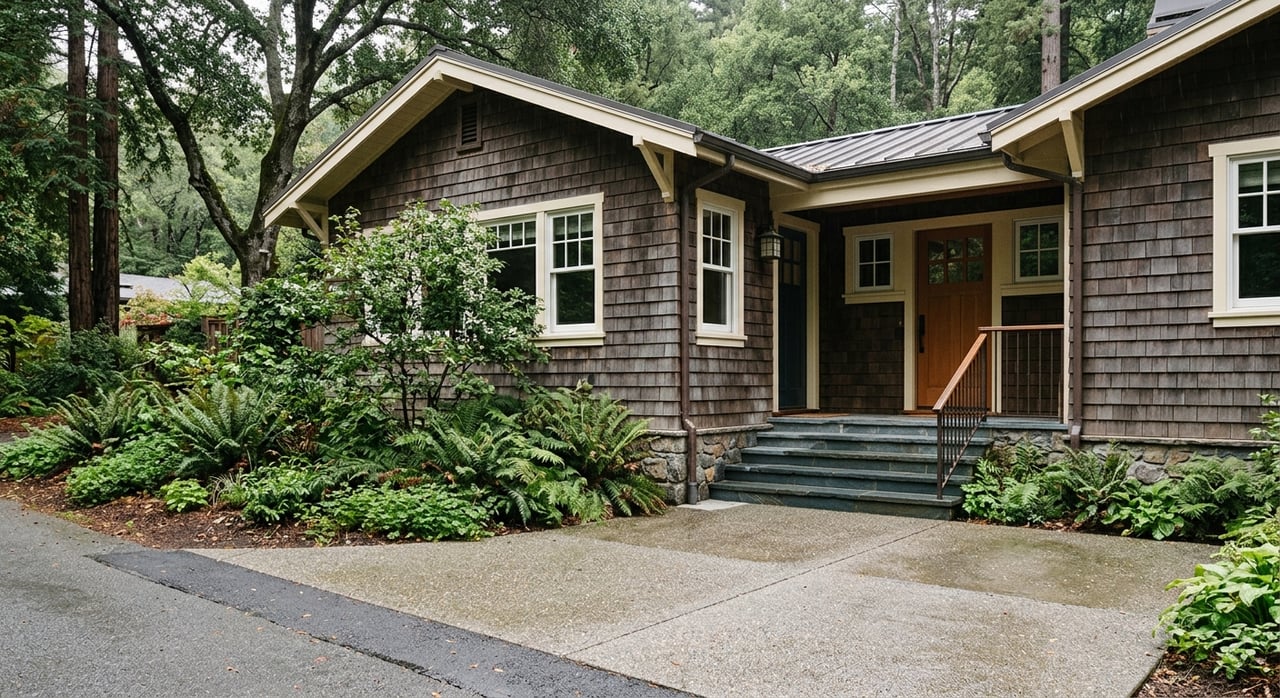
The styles mentioned by the city include Vernacular, First and Second Bay Tradition, Queen Anne, Italianate, Craftsman, Colonial Revival, Spanish Colonial Revival, Tudor, and Art Deco. In practical terms, that means your options may differ a lot not just by location, but by how a home lives, flows, and has been updated over time.
Postwar areas add another texture. The city highlights minimal traditional and California ranch homes from the post-World War II period, including examples in Sycamore Village and Goheen Gulch.
Why housing texture affects daily life
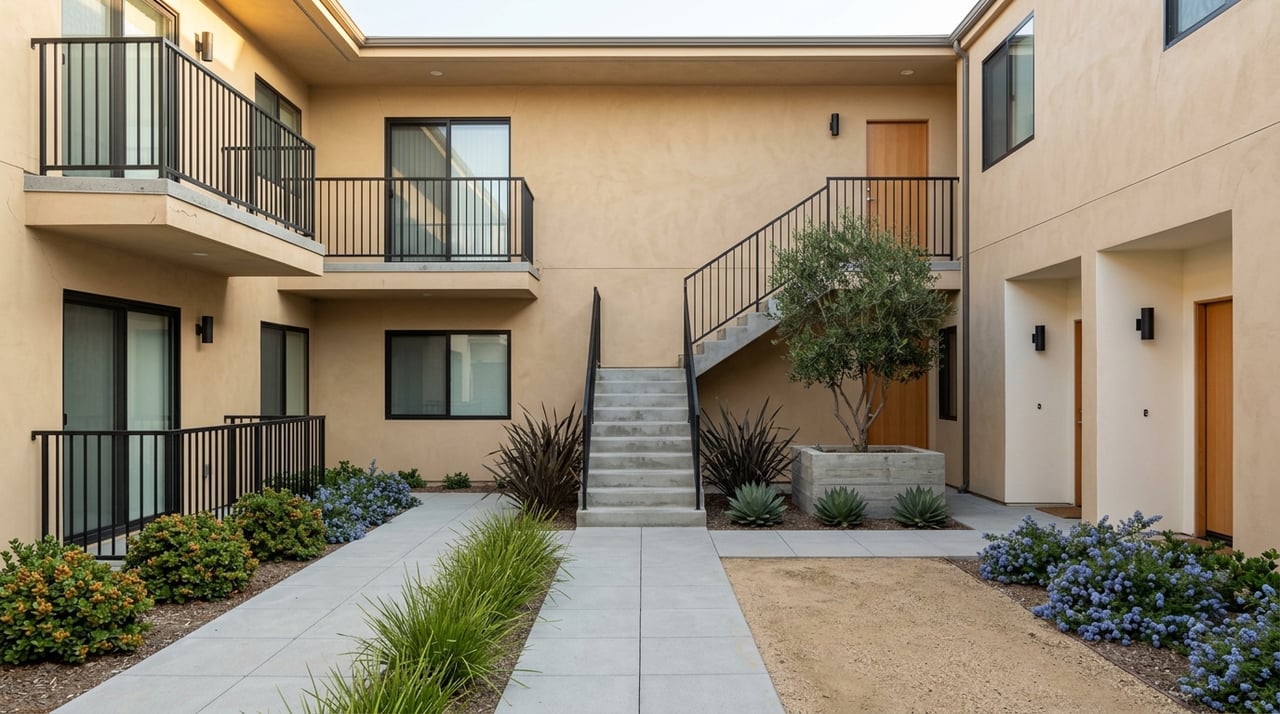
A home’s era often shapes how it functions. Many Mill Valley homes are rectangular or L-shaped, often one story, with attached or detached garages and later additions, which helps explain why remodels and expansions are common.
For buyers, that means it is worth looking beyond square footage alone. Layout, light, storage, entry sequence, and how the house sits on the lot can all affect how comfortable daily life feels.
ADUs are part of the conversation
Accessory dwelling units are relevant in Mill Valley, especially for buyers thinking about flexibility and long-term use. The city has a dedicated ADU page and points residents to local regulations and California rules.
If you are looking at a property with an existing ADU, space for one, or renovation potential, that can be part of the value discussion. In Mill Valley, where the city is largely built out, flexible use matters.
This is also where a design and strategy mindset can help. The right improvements are not just about adding space. They are about making a property live better and perform better over time.
A simple way to narrow your search
If Mill Valley feels broad at first, use a simple filter based on how you want your week to work. The clearest shorthand is this:
- Downtown for walkability and easy access to the civic core
- The flats for commute convenience and practical daily logistics
- The hills for privacy, trail access, and a more nature-oriented setting
This framework is useful because it focuses on lived experience, not just map boundaries. Once you know which daily rhythm fits you best, the home search usually becomes much more efficient.
How to evaluate neighborhood fit
When I help buyers compare Mill Valley, I like to keep the decision grounded in routines rather than hype. Ask yourself:
- How often do you want to walk to errands or coffee?
- How important is quick Highway 101 access?
- Are stairs and grade a dealbreaker, or part of the appeal?
- Do you want a more connected setting or a more tucked-away one?
- Are you searching only within city limits, or also considering nearby unincorporated areas with Mill Valley addresses?
Those answers usually tell you more than a generic neighborhood label. In Mill Valley, the day-to-day experience is often won or lost in the small details.
If you want help sorting through those tradeoffs, working with someone who knows Marin’s micro-locations can save a lot of time. AnneLise Staal offers candid neighborhood guidance, relocation support, and a strategy-first approach to help you find the right fit.
FAQs
What does downtown Mill Valley feel like day to day?
- Downtown Mill Valley tends to feel the most walkable, with easier access to shops, dining, civic spaces, and everyday errands around Throckmorton, Miller, Sunnyside, Corte Madera, and Old Mill.
What do the flats in Mill Valley feel like for commuting?
- The flatter east-side corridors around Miller Avenue, East Blithedale, Camino Alto, Sycamore, and nearby areas often feel more commute-friendly because they connect more directly to Highway 101 and transit options.
What do hillside Mill Valley neighborhoods feel like daily?
- Hillside and canyon neighborhoods usually feel quieter, more private, and closer to open space, with the tradeoff of more grade, more stairs, and in some cases greater car dependence.
Are all Mill Valley mailing addresses inside Mill Valley city limits?
- No. Areas such as Strawberry, Tam Valley, Homestead, Almonte, and Alto can have Mill Valley mailing addresses while being outside the city limits in unincorporated Marin County.
What kind of homes are common in Mill Valley neighborhoods?
- Mill Valley has a varied mix of historic and postwar housing, including early architectural styles such as Craftsman and Tudor, along with later minimal traditional and California ranch homes.
Why do buyers need to think about micro-location in Mill Valley?
- Buyers need to think about micro-location because Mill Valley’s built-out setting, steep topography, path network, and mix of city and unincorporated areas can create very different daily routines from one area to another.